Kitchen cookware is changing in ways shoppers can see and feel: a heavier base on an induction hob, a pan that releases eggs with less oil, or a lid that stores neatly in a crowded cupboard. So, what are the latest trends in kitchen cookware? The answer goes beyond new finishes. Materials, compatibility, durability, and easier everyday care are shaping product design and buying decisions.
Grand View Research estimated the global cookware market at USD 30.4 billion in 2023 and projected a 6.7% compound annual growth rate from 2024 to 2030. That forecast signals a growing category, not a guarantee that every new feature will succeed. The company’s market report provides useful industry context, while product claims still need to be checked against independent testing and clear material disclosures. A sleek coating may look appealing. How it performs after months of stirring, washing, and high heat matters more.
This guide explores ten cookware trends expected to draw attention in 2026, including induction-ready designs, hybrid surfaces, durable stainless steel, and space-conscious sets. It also considers evolving expectations around coatings, repairability, and resource use. Some trends are easier to verify than others; “sustainable” can mean very little without specifics. The aim is practical: connect industry signals with the details that matter at home, from pan weight to handle comfort. Not every trend belongs in every kitchen.
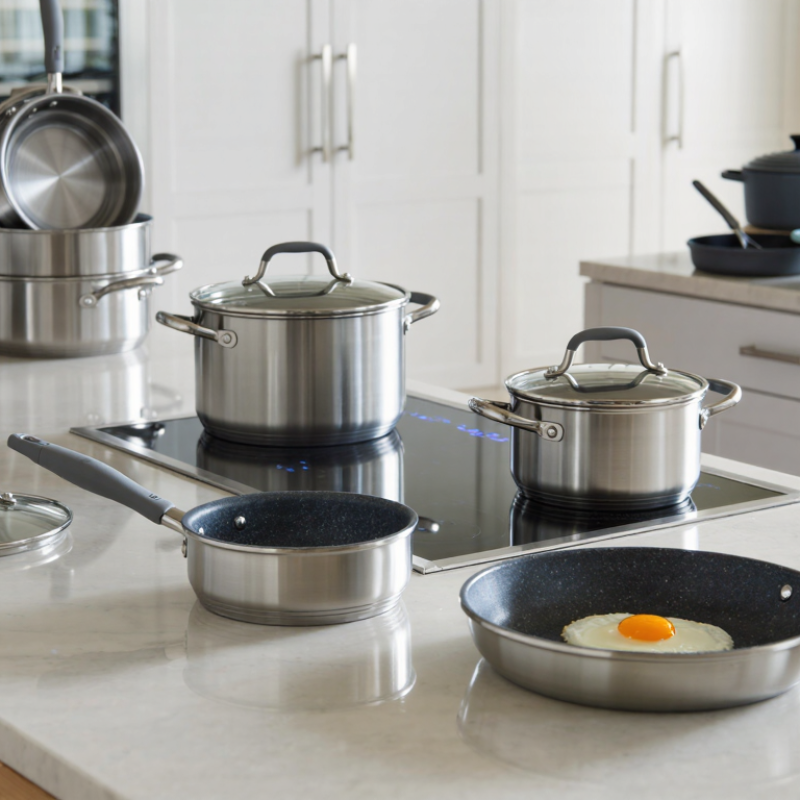
Evaluating cookware trends for 2026 means looking beyond polished product photos. A pan may look sleek but heat unevenly, leaving one side of an omelet pale and the other browned. Useful comparisons examine heating consistency, stability on common cooktops, handle comfort, and how easily food releases. Small details matter. A heavy lid can feel awkward during everyday cooking, while a rough rim may make pouring messy.
Testing should reflect real kitchen routines, not just ideal conditions. Reviewers can cook the same foods in different pans, note temperature changes, and check surfaces after repeated washing. They should also distinguish measured results from personal impressions and explain how long each item was tested. Durability claims deserve particular care; a few weeks of use cannot predict years of wear. Materials, repair options, care requirements, and price help show whether a trend offers practical value. Not every new finish or shape solves a real problem. That is easy to forget when novelty photographs well.
This editorial comparison considers practical cooking performance, material and coating transparency, cooktop compatibility, durability, maintenance, and everyday value. The order is a qualitative outlook, not a laboratory test or a guarantee that every product in a category performs equally well.
| Rank | Cookware trend | Why it matters in 2026 | How to evaluate it | Trade-off to consider | 2026 outlook |
|---|---|---|---|---|---|
| 1 | Clearly disclosed PFAS-free nonstick coatings | Shoppers are paying closer attention to coating ingredients and product disclosures, while still seeking easy-release cooking and cleanup. | Look for a specific, accessible statement about the coating and what “PFAS-free” covers. Check care instructions, the recommended heat range, and warranty terms. | Nonstick performance can decline as a coating wears. “PFAS-free” alone does not establish long-term durability or explain every material used. | Strong interest, especially when claims are precise and backed by product documentation. |
| 2 | Multi-ply stainless steel | Layered construction combines a stainless-steel cooking surface with a heat-conductive core, offering a durable option for browning, searing, and everyday cooking. | Check which layers extend through the pan, handle comfort, weight, lid fit, and whether the cookware works on the intended cooktop. | Food can stick without suitable preheating and cooking technique; stainless steel is not inherently nonstick. | A versatile long-term choice for cooks willing to learn basic temperature and fat management. |
| 3 | Induction-ready cookware | Induction requires cookware with a magnetic base, so compatibility matters for households using induction or considering a future cooktop upgrade. | Verify the manufacturer’s induction compatibility information or test the base with a magnet. Check that the base sits flat and is sized appropriately for the burner. | Not every stainless-steel or aluminum pan works on induction; some designs may heat unevenly if the base is poorly matched to the cooktop. | Increasingly practical as a compatibility feature, even for buyers who may change cooktops later. |
| 4 | Carbon-steel skillets and pans | Carbon steel offers a responsive cooking surface that can develop a seasoned patina with use, making it appealing for high-heat cooking. | Assess pan weight, handle design, flatness, seasoning instructions, and compatibility with the cooktop and cooking methods you use. | It typically needs seasoning and careful drying; acidic foods can affect the seasoning, particularly on a newer pan. | A compelling option for hands-on cooks who value heat response and do not mind routine care. |
| 5 | Stackable and space-saving cookware | Compact storage can make a curated cookware set more useful in smaller kitchens and crowded cabinets. | Check whether pieces nest securely, whether lids and handles also store neatly, and whether stacking could scratch or damage cooking surfaces. | Removable or compact components can add setup steps; protective separators may be needed between stacked pans. | Strong everyday appeal where storage space is limited, provided the design remains stable and easy to use. |
| 6 | Cookware with verified recycled content | Recycled metal content is receiving more attention as buyers consider the materials used in household products. | Look for a stated recycled-content percentage, the material it applies to, and credible supporting documentation rather than a broad sustainability slogan. | Recycled content by itself does not establish cooking performance, product lifespan, or the overall environmental impact of a pan. | A meaningful differentiator when material claims are specific and the cookware also meets practical performance needs. |
| 7 | Enamel-coated cast iron | Enamel provides a non-seasoned cooking surface on cast-iron cookware and is available in forms suited to braising, simmering, and oven cooking. | Review the care guidance, lid fit, interior finish, weight, and the stated limits for oven and cooktop use. | Cast iron is heavy, and enamel can chip if cookware is dropped or handled roughly. Thermal shock should be avoided. | A durable-feeling choice for slow cooking and serving, if weight and careful handling are acceptable. |
| 8 | Clear oven-safe temperature ratings | Oven use can make a pan more versatile, but safe limits depend on the complete construction, including handles, knobs, and lids. | Check the stated temperature limit for the pan and each included component; do not assume a lid or handle shares the pan’s rating. | Temperature limits vary by design. Some handles, coatings, and lid components may have lower limits than the body of the pan. | A useful buying criterion as cooks look for cookware that moves safely between stovetop and oven. |
| 9 | Replaceable handles, knobs, and parts | Access to replacement components can extend the useful life of cookware when a handle, knob, or lid is damaged or lost. | Confirm that replacement parts are actually available, compatible with the specific model, and supported with clear fitting instructions. | Parts availability may vary over time, and a detachable component must lock securely during normal cooking. | A practical durability feature when replacement support is clear and the connection is stable. |
| 10 | Smaller, task-focused cookware sets | Sets built around frequently used pan sizes can reduce unnecessary duplication and help buyers choose cookware for their real cooking habits. | Compare the included pieces with typical meals, household size, storage space, and whether lids fit more than one pan. | A compact set may not include a specialty pot or pan needed for particular recipes; piece count alone is not a measure of value. | A sensible alternative to buying a large set, especially for first kitchens and selective replacements. |
Evaluation guide: Prioritize transparent material information, verified cooktop compatibility, appropriate care and temperature instructions, secure construction, and replacement-part support. Product performance varies by design and use; compare the specifications of individual pieces before buying.
Some pans may use temperature sensors, automatic shutoffs, and clearer heat indicators. A steady reading can help reduce scorching. Not magic.
Not always. Sensors can assist, but attention at the stove still matters. A clever pan may not suit your daily meals.
Smart storage and cooking features may help you use ingredients on time. Cookware alone cannot solve the problem.
Stainless steel works well for browning and pan sauces. Cast iron holds heat for searing. Carbon steel is lighter, but needs seasoning and careful drying.
Match it to your stove, and check for a flat, stable base. That matters. Also consider weight, handle comfort, oven limits, and storage space.
No. Durability varies, and “ceramic” does not guarantee a longer-lasting surface. Check heating, cleaning, and replacement guidance.
Start with the meals you actually cook. Buy one or two useful pieces, then notice what your kitchen lacks. Trendy can still be awkward.
Look for repairable handles, replaceable parts, and clear surface labels. Vague claims deserve a second look. Keep the care instructions nearby.
This guide explores what are the latest trends in kitchen cookware and how they are shaping the way people cook at home in 2026. It considers how cookware is evaluated, including durability, heat performance, ease of use, maintenance, and overall value. It also examines the materials influencing new collections, from familiar stainless steel and cast iron to lighter, more versatile options designed for everyday cooking. Alongside materials, the guide highlights changing shapes, stackable designs, improved handles, and features intended to make cookware more adaptable across different cooking tasks.
Emerging priorities include thoughtful sustainability, safer food-contact surfaces, and practical innovations that support efficient cooking without adding unnecessary complexity. Rather than treating any single trend as right for everyone, the guide offers a framework for comparing the ten leading directions according to household needs, cooking habits, available storage, and budget. Readers can use these considerations to choose cookware that balances performance, convenience, and long-term usefulness.

 Eartha Cookware