Direct from factory sourcing solutions featuring high thermal thresholds and chemical-resistant coatings.
Insights into material engineering and consumer demands driving the global cookware market.
The transition toward PFAS-free coatings and anodized aluminum substrates designed to withstand harsh alkaline dishwasher detergents without losing structural integrity or non-stick performance.
Global brands require multi-functional kitchenware that integrates induction capability with dishwasher durability. Demand is surging for high-volume OEM/ODM capacity in industrial hubs like Foshan, China.
Modern consumers prioritize convenient cleanup. True "dishwasher-safe" verification requires testing against high-temperature cycles (exceeding 70°C) and corrosive wash agents.
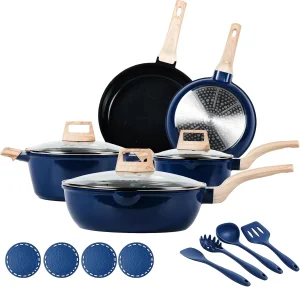
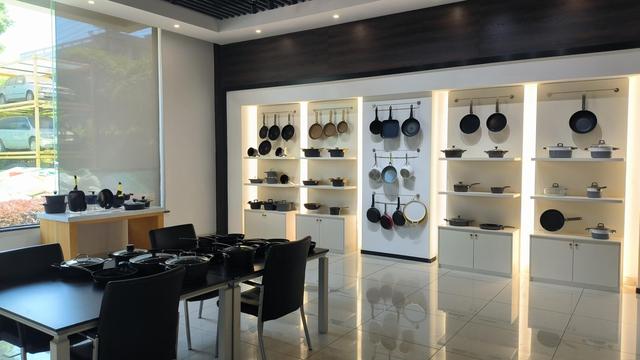
Foshan Eartha Cookware Co., Ltd. is a professional China ceramic cookware set manufacturer and nonstick kitchen cookware supplier, dedicated to providing high-quality, healthy, and innovative cookware solutions for customers worldwide. Located in Foshan, Guangdong, one of China's leading manufacturing hubs, Eartha Cookware integrates product design, research and development, manufacturing, and global sales to serve international markets.
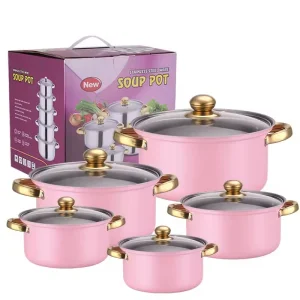
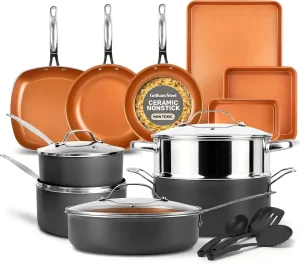
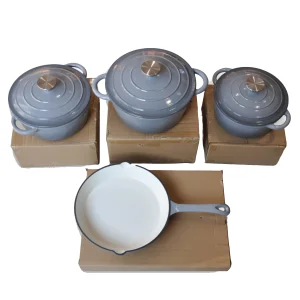
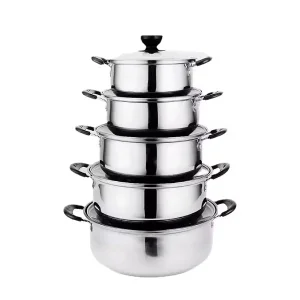
Our extensive product range includes ceramic nonstick cookware sets, frying pans, saucepans, stock pots, casseroles, induction cookware, PFAS-free cookware, and multifunction kitchen cookware. Designed for modern kitchens, our products combine excellent heat distribution, superior nonstick performance, durability, and stylish aesthetics to enhance everyday cooking experiences.
PFAS & PFOA Free
Exporting Nations
Flexible Solutions
Wash Temp Resistant
The term "dishwasher safe" is frequently used in the retail industry, yet behind this classification lies complex material engineering. In an automatic residential or commercial dishwasher, cookware is subjected to highly demanding conditions: rapid thermal shifts, high-pressure water jets, and alkaline detergents containing sodium carbonate, sodium silicate, and enzymes that operate at high pH levels (often between 10 and 11.5). For standard metals and coatings, this environment is highly corrosive. Understanding the chemical and physical mechanics of these processes is essential for global buyers and brand owners looking to minimize return rates and warranty claims.
Aluminum is one of the most popular thermal conductors used in cookware due to its rapid heat distribution. However, untreated aluminum is highly reactive to alkaline chemicals. When exposed to hot dishwasher water containing alkaline detergents, non-anodized aluminum undergoes rapid oxidation, leading to a dull grey or black discoloration known as aluminum hydroxide buildup. To resolve this, modern factories utilize either hard-anodization or encapsulation within protective layers.
Hard-anodized aluminum undergoes an electrochemical process that thickens the natural oxide layer, turning the surface into a durable ceramic-like structure that resists chemical attack. For stainless steel cookware, manufacturers rely on high-grade austenitic alloys like 18/10 (SUS304). The chromium content in the alloy reacts with atmospheric oxygen to form a self-healing passive layer of chromium oxide. If this passive layer is damaged, high-chloride detergents can cause pitting corrosion unless the steel is properly formulated and polished to eliminate surface imperfections.
Traditional non-stick coatings, particularly those utilizing polytetrafluoroethylene (PTFE), can suffer from delamination when washed in a dishwasher. The hot water and chemicals can penetrate micro-fractures in the non-stick layer, attacking the primer coat and degrading the bond between the coating and the metal substrate. This leads to peeling and blistering.
To overcome this issue, Foshan Eartha Cookware Co., Ltd. utilizes advanced sol-gel ceramic coatings. Formulated from inorganic silica-based materials, these ceramic non-stick coatings establish covalent chemical bonds directly with the metal base. The result is a glass-like surface that is completely impervious to the alkaline agents of modern dishwashers, ensuring long-lasting performance and food safety.
Multi-ply cookware—where layers of stainless steel, aluminum, and sometimes copper are bonded together—is highly susceptible to thermal shock during the cooling phase of a dishwasher cycle. Different metals expand and contract at different rates (thermal expansion coefficients). For example, aluminum expands roughly twice as much as stainless steel under heat.
If the bonding process (impact bonding or clad pressing) is not executed under precise metallurgical parameters, repeated thermal cycles in a dishwasher will lead to micro-gaps at the edges, causing the layers to separate over time. Professional factories resolve this through sealed-rim designs or strict quality control in high-pressure thermal bonding presses.
The evolution of cookware technologies focusing on durability, health compliance, and production automation.
Complete replacement of fluoropolymer coatings with high-performance silicon-based sol-gel coatings that resist temperatures up to 450°C and maintain non-stick properties over 500 dishwasher cycles.
Development of spray-applied magnetic stainless steel backings on aluminum bases, replacing traditional pressed plates to eliminate water trapping and oxidation between layers during dishwasher runs.
Integration of recycled stainless steel and ocean-bound plastics for accessory components, coupled with chemical curing systems that reduce carbon emissions during manufacturing by up to 30%.
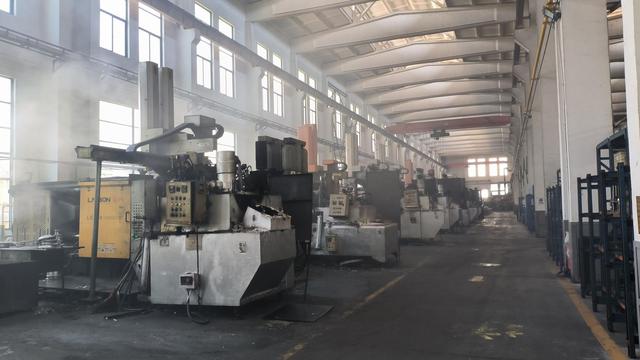
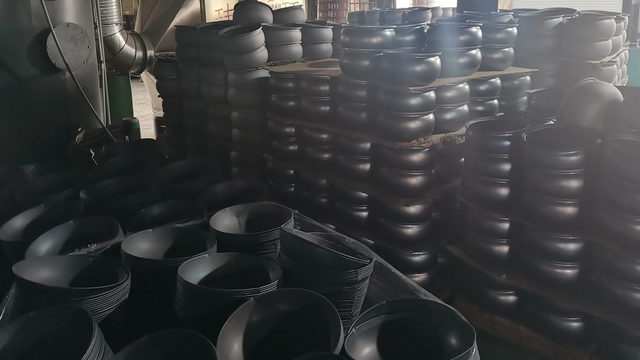
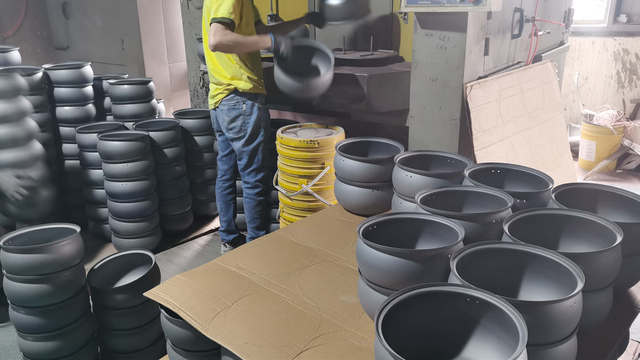
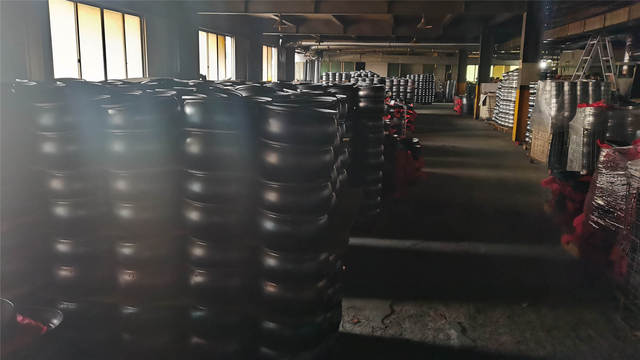
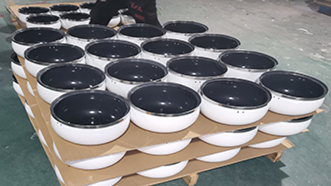
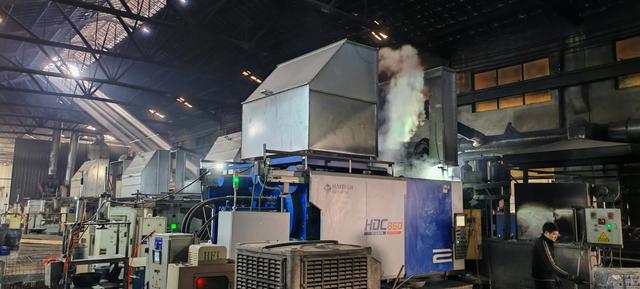
Take an inside look at how Foshan Eartha Cookware Co., Ltd. manages its production and testing processes.
Equipped with advanced automated production lines and comprehensive testing facilities, Eartha Cookware strictly controls every stage of manufacturing, from raw material selection to final inspection. We are committed to producing environmentally friendly and food-safe cookware that meets international quality and safety standards. Our experienced quality control team ensures consistent product performance, reliability, and long service life.
To support global brand owners, wholesalers, distributors, retailers, and e-commerce businesses, we offer flexible OEM and ODM services. Our professional R&D team works closely with customers to develop customized cookware solutions, including product design, coating options, color matching, packaging, and private labeling.
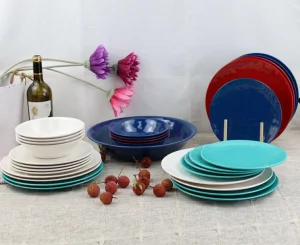
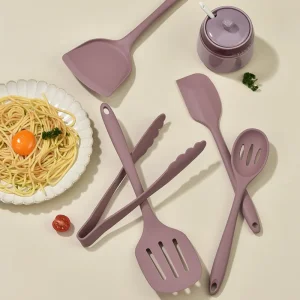
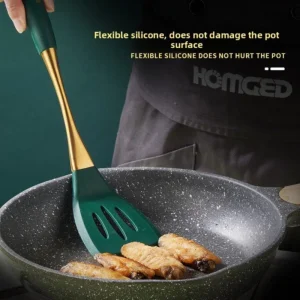
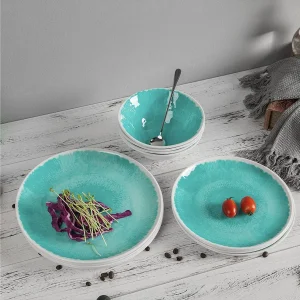
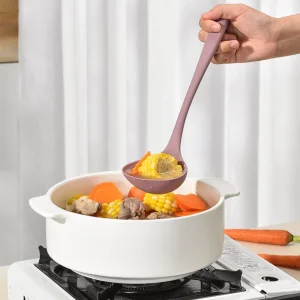
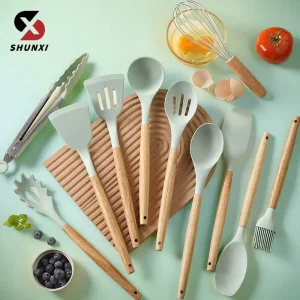
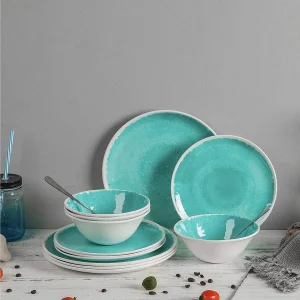
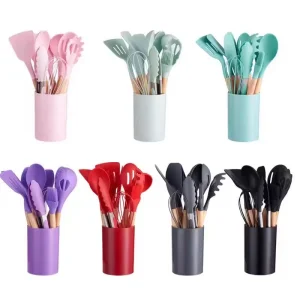
Diverse material configurations including food-grade silicone and heat-resistant melamine.

Crucial industrial insights and engineering solutions answered by Foshan Eartha Cookware's technical team.
Traditional non-stick coatings use thin bonding polymers that struggle with the high heat (exceeding 70°C) and aggressive chemistry of dishwasher detergents. Over time, the wash chemistry weakens the adhesive base coat, resulting in peeling and reduced non-stick performance. Modern sol-gel ceramic non-stick coatings are inorganic and form a secure covalent bond directly to the metal substrate, offering much higher resistance to this type of degradation.
We use premium materials like hard-anodized aluminum and 18/10 stainless steel (containing 18% chromium and 10% nickel). For aluminum bases, a special hard protective layer is created electronically to seal the metal from detergents. For stainless steel, the high chromium content forms a natural passive surface layer that protects against rust and pitting.
Our entire catalog of ceramic cookware, silicone utensils, and melamine dinnerware is fully certified under food safety standards such as FDA, LFGB, and REACH. Our manufacturing facility complies with ISO 9001 quality systems and BSCI corporate audits, ensuring safe, legal, and ethical sourcing for global retail networks.
Our specialized R&D team in Foshan provides complete, end-to-end design and manufacturing services. We work closely with our partners to create custom molds, apply specialized coatings, select colors, design custom packaging, and provide private labeling. This ensures your products align perfectly with market demands and your brand identity.
 Eartha Cookware