Ceramic cookware can look simple to care for, yet “seasoning” means different things for different pans. Traditional cast iron often needs a baked-on oil layer. Most ceramic-coated pans do not. Their cooking surface is usually designed to work without that treatment, and excess oil or high heat may leave a sticky film or shorten its useful life. That distinction matters.
This guide explains how to season ceramic cookware safely, while making clear when seasoning is unnecessary. The right approach starts with the manufacturer’s care instructions, since coatings and recommendations vary. For many pans, a gentle wash, thorough drying, and a small amount of cooking oil before use are enough. No oven ritual is needed unless the maker specifically recommends one. Keep the burner moderate. Let the pan warm gradually. A thin sheen of oil should look almost invisible, not pool in the center. If food still sticks, seasoning may not be the answer; excess heat, worn coating, or too little fat can also be factors. It is easy to assume that every pan benefits from the same routine. It doesn’t. The following steps focus on practical care, common mistakes, and signs that a pan needs attention rather than another layer of oil. For specific temperatures or timing, the product instructions remain the more reliable guide.
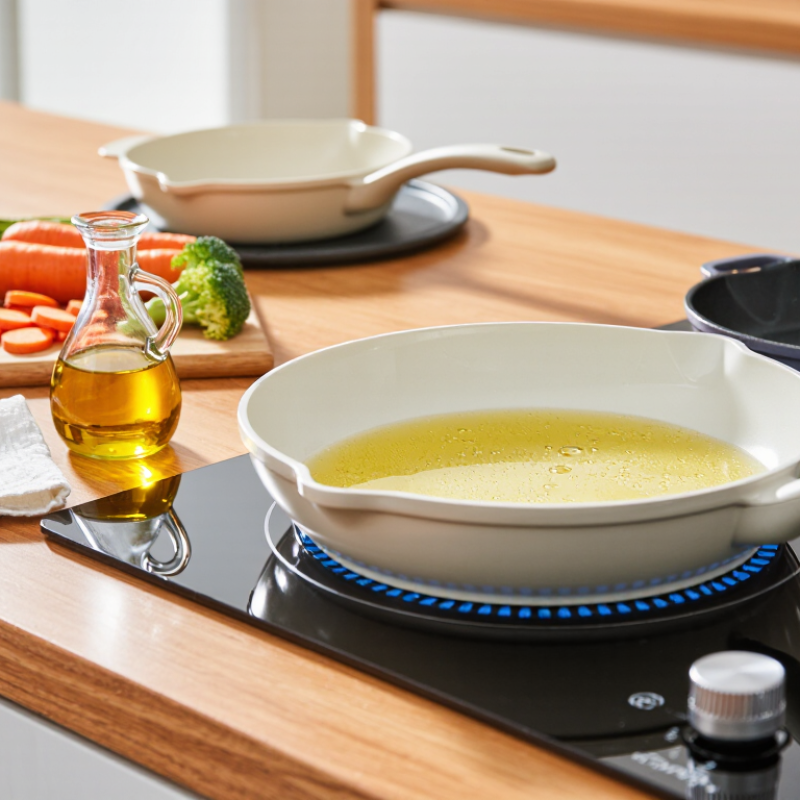
Ceramic cookware can be confusing because the name describes two different surfaces. Many “ceramic” frying pans are metal pans, often aluminum, covered with a thin ceramic-derived nonstick coating. They are not solid ceramic. Bare ceramic cookware, such as glazed pottery, has a different structure and care needs. The outside alone may not tell you which type you own, so check the care instructions or product details.
A ceramic nonstick coating usually does not need traditional seasoning. Heating a layer of oil until it bonds to the surface may leave sticky residue or stress the coating. For routine care, wash the pan with warm water and mild dish soap, then dry it with a soft towel. Use low or medium heat, and add a little oil when cooking if the instructions allow it. Avoid sudden temperature changes. A hot pan under cold tap water can be a harsh shock.
There is a small wrinkle: some cookware instructions suggest a light oil conditioning before first use. Follow that guidance rather than applying one rule to every pan. I find the word “seasoning” misleading here; it can make coating care sound like cast-iron care. A soft sponge is usually a safer choice than an abrasive pad, even when stuck egg seems tempting to scrape away.
Before seasoning ceramic cookware, check its care guide. Many ceramic-coated pans need no seasoning at all. Their cooking surface is designed to work without a baked-on oil layer. Applying oil and heating the pan unnecessarily may leave sticky residue or affect the coating. “Ceramic” can also describe different materials, so one pan’s care routine may not suit another. Manuals are sometimes vague; if yours is unclear, contact the maker rather than guessing.
If the instructions do call for seasoning, follow their exact steps. They may specify a small amount of cooking oil, gentle heat, or a particular cooling method. Do not heat an empty pan or put it in the oven unless the guide says it is safe. For everyday care, wash with a soft sponge, dry thoroughly, and avoid sudden temperature changes. These small habits matter more than adding extra oil.
Tips: Use a little oil when cooking, not as a substitute for care instructions. Let the pan cool before washing. If food starts sticking, check the guide first; seasoning may not be the fix.
Before using ceramic cookware, wash the pan with warm water and mild dish soap. Use a soft sponge, not an abrasive pad that could scratch the cooking surface. Rinse away any soap, then dry the pan fully with a clean towel. Check the care instructions, too; coatings and materials can vary. Keep it simple. A clean, dry pan is usually ready to use.
Do not assume ceramic cookware needs seasoning like cast iron. Add oil only if the maker specifically recommends it, and follow the stated amount and method. If advised, a thin film spread with a paper towel is often easier to control than a pour. No oil by default. Extra oil can leave a sticky layer, especially if heated repeatedly. I used to think a little more oil could only help, but that is not a safe rule for every coating. Avoid heating an empty pan, and use moderate heat unless the instructions say otherwise. If food begins sticking, check the cleaning routine and cooking temperature before trying an improvised seasoning step. A dull-looking surface alone does not necessarily mean the pan needs oil.
Ceramic cookware does not always need seasoning; some manufacturers advise against it. Check the care instructions first. If seasoning is approved, wash and dry the pan completely, then spread a few drops of cooking oil across the surface. Wipe away the excess until the finish looks almost dry. A visible pool can turn sticky. Keep the pan on low-to-medium heat, and never leave it empty over a flame or hot burner.
Use the oil’s smoke point as a safety reference, not a target. The North American Olive Oil Association gives a broad smoke-point range of about 350–410°F (177–210°C) for extra-virgin olive oil, depending on the oil. That range shows why high heat is unnecessary for a thin seasoning layer. Warm the pan gently until the film looks glossy, then turn off the heat and let it cool before wiping it once more. Avoid smoking oil. I still check the care guide twice, because ceramic finishes and instructions can differ. A faint, even sheen is the goal—not a dark, baked-on coating.
Typical smoke points of selected cooking oils (approximate °C)
Smoke points vary by oil and product; they are not recommended pan temperatures. Season ceramic cookware only if its manufacturer approves it. If approved, apply a thin oil film and use low-to-medium heat—do not heat the oil until it smokes.
Ceramic cookware has no universal seasoning temperature. “Ceramic” may describe a coated metal pan or a ceramic vessel, and their heat limits differ. Follow the model’s care sheet, not a temperature copied from another pan. If seasoning is recommended, use only a thin film of the specified oil and the stated heat setting. A glossy pool of oil is too much. Keep the pan dry and clean first; residue can smoke before the cookware reaches its limit. Small detail, big difference.
Your cooktop matters, too. The U.S. Department of Energy’s Energy Saver guidance reports that induction transfers about 85% of its energy to food, compared with about 32% for gas. Those figures are not pan-temperature ratings, but they show why the same dial setting can heat cookware differently. Start low, warm gradually, and stop if the oil smokes or the coating changes appearance. Never assume an oven-safe rating also approves stovetop seasoning; they describe different uses. I would check the manual again before trying an unfamiliar method. Easy to overlook. If the instructions say not to season, skip it. A little uncertainty is better than overheating a pan.
Usually not. Many pans have an aluminum body with a thin ceramic-derived coating. Check the care instructions to identify yours.
Usually, no. Heating oil to bond it may leave sticky residue or stress the coating. I find “seasoning” a confusing term here.
Wash it with warm water and mild dish soap. Use a soft sponge, then dry it with a soft towel. Skip abrasive pads.
Only if its instructions recommend it. Some models suggest a light oil coating. Follow that guidance, not a universal rule.
No. Heat limits vary by pan. Follow the model’s care sheet, and use only the specified heat setting and a thin film of oil.
Stop heating. Residue or excess oil can smoke, so keep the pan clean and dry before any recommended conditioning. A glossy pool is too much.
Avoid sudden temperature changes. Cold water on a hot pan can cause a harsh temperature shock.
Not necessarily. Oven safety and stovetop seasoning describe different uses. Check the instructions again; it is easy to overlook that distinction.
The best approach to how to season ceramic cookware is to first identify what kind of surface you have. Many pans described as ceramic cookware have a ceramic-based nonstick coating rather than a solid, uncoated ceramic surface. Because care instructions vary, check the manufacturer’s guidance before adding oil or applying heat. Many coated pans do not need seasoning at all.
Before first use, wash the pan gently and dry it completely. Add oil only if the care instructions recommend it. If seasoning is approved, spread a very thin film of suitable cooking oil over the surface and warm the pan on low to medium heat, following the specific directions for your model. Always stay within the pan’s stated heat rating. There is no universal seasoning temperature for ceramic cookware, so avoid assuming that one method or temperature suits every pan.

Eartha Cookware