Cookware is an investment, but careless storage can quietly shorten its useful life. Scratched nonstick surfaces, chipped enamel, bent lids, and trapped moisture often begin inside crowded cabinets. That is why learning how to store cookware without damaging it matters for both performance and household safety.
The global cookware market was valued at approximately USD 19.7 billion in 2023, according to Fortune Business Insights’ Cookware Market report. This expanding market includes nonstick pans, stainless steel, cast iron, ceramic cookware, and detachable-handle designs. Each material needs different protection. Nonstick pans need separation. Cast iron needs dryness. Glass lids need stable support. One method cannot solve everything.
America’s Test Kitchen executive tasting editor Lisa McManus offers a useful principle: “Good cookware should be stored where it is protected, accessible, and ready to use.” The sentence sounds simple. Daily kitchens often ignore it. A heavy Dutch oven may sit on a delicate frying pan, while a damp lid stays upside down overnight. That small mistake can create rust, scratches, or unpleasant odors.
A reliable storage plan starts with weight and surface contact. Place heavier pieces below lighter ones, and use pan protectors between coated surfaces. Store lids vertically when possible. Keep handles from pressing against cabinet doors. Let cookware cool and dry completely before stacking. I still think many storage guides underestimate awkward cabinets and limited budgets. Perfect organization is not realistic. Better protection is. This article explains practical ways to reduce damage without buying an entirely new kitchen system.
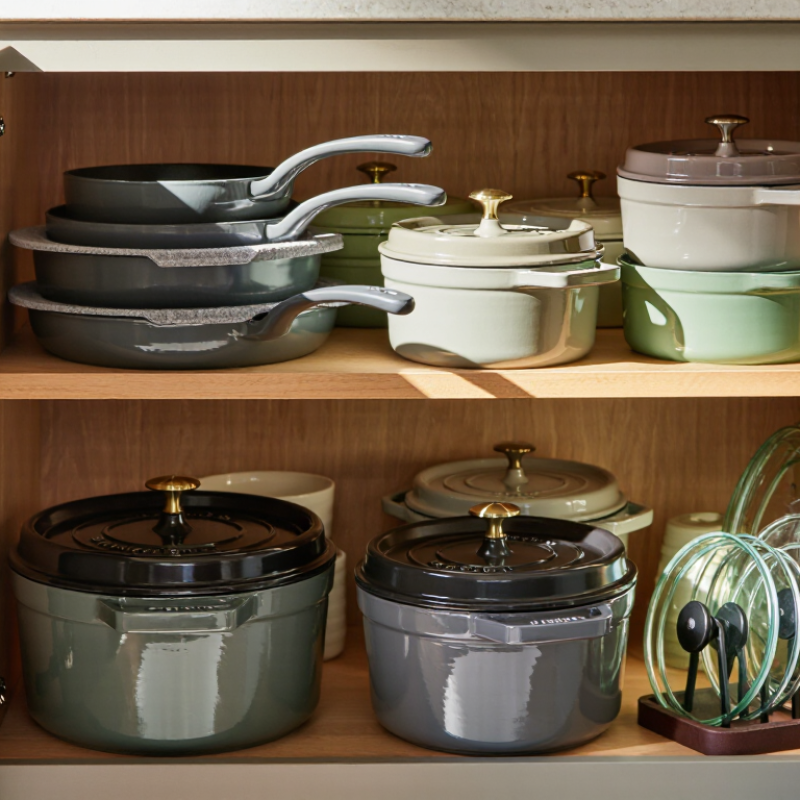
Cookware storage begins with material assessment, not cabinet size. Stainless steel tolerates stacking well, but trapped moisture can create stains. The World Stainless Association reported global crude stainless steel production at about 58 million tonnes in 2023, reflecting its extensive use in durable kitchen equipment. Store stainless pieces completely dry, with soft separators between polished surfaces.
Cast iron needs different treatment. Its porous seasoning layer can rust when air remains humid. Wipe it dry, apply a very thin oil film, and avoid sealed plastic storage. Aluminum is lighter but scratches more easily, so place felt or cotton between pans. Nonstick cookware requires the most care. Avoid nesting without protection, because one hard rim can damage the coating. The U.S. Food and Drug Administration’s Food Code stresses clean, dry, and protected storage for food-contact equipment; this principle also suits home cookware.
Copper conducts heat efficiently, yet its surface can tarnish and react with harsh cleaners. Hang it only when the handle and wall hook are strong enough. I once stored a heavy pan above a lighter saucepan and ignored the pressure marks. That was a poor choice. Weight, humidity, coating type, and handle design should be checked together. A 2024 cookware market analysis by Grand View Research identifies stainless steel, aluminum, and coated cookware as major material categories, but market popularity does not equal identical storage needs.
China Top Cookware: How to Store Cookware Without Damage?
Clean, completely dry every piece before storage. This simple habit prevents stains, odors, rust, and hidden moisture damage. After washing, rinse away all soap residue and inspect the rims, handles, and rivets. Water often hides around these areas. Wipe each item with a soft towel, then let it air-dry briefly in a ventilated place. Do not stack cookware while it feels cool or damp. That small shortcut can create trapped moisture overnight. I once stored a pan too soon, and a dull mark appeared near the handle. It was removable, but I had created an avoidable problem.
Tips: Dry lids separately, especially around their edges. Place a soft cloth between stacked pieces to reduce scratches. Keep heavy cookware below lighter items. Store knives and sharp accessories away from cooking surfaces. Check the cabinet occasionally for condensation or leaks. Avoid sealing slightly damp cookware in closed spaces. It seems obvious. It is often forgotten.
For long-term storage, keep cookware in a clean, dry cabinet with enough airflow. Do not force several pieces into one tight stack. Crowding can damage coatings, handles, and delicate edges during removal. If cookware has removable parts, dry each part individually before reassembly. Wooden or fabric accessories need complete drying as well. I sometimes leave pieces out longer than necessary, which is inconvenient but safer. A few extra minutes of drying can protect the surface for years. Inspect stored cookware regularly, because small moisture marks are easier to manage early.
Storing cookware safely starts with one simple rule: metal should not rub directly against another surface. In my kitchen, I place a soft felt, cotton, or silicone layer between stacked pots and pans. These barriers reduce scratches caused by movement, especially on coated or polished surfaces. Cut each layer slightly wider than the cookware base. This prevents exposed edges from touching the next item.
Lids need protection too. Place a thin cloth between a lid and its pan, or store lids separately with their handles facing upward. Never stack heavy cookware on delicate surfaces.
A deep pot should support another deep pot, while shallow pans stay above them. Keep handles aligned carefully. Crowded cabinets can create pressure points and chipped edges.
Moisture is another quiet source of damage. Dry every piece completely before adding a protective layer, because trapped water may cause stains or corrosion. Cast iron needs a very thin oil coating before storage, while nonstick surfaces should remain free from abrasive paper or rough fabric.
I once used a textured towel that left faint marks on a pan. It seemed harmless, but the mistake was avoidable.
Check the layers regularly, replace dusty or damp material, and leave enough space for each item to be removed without scraping.
Storing cookware safely begins with a simple rule: keep heavy items low and light items high. Place large stockpots on sturdy lower shelves, where their weight will not strain cabinet hinges. Store medium saucepans in the middle, with handles turned sideways to save space. Smaller pans can sit above them if the shelf remains stable. Leave a little breathing room.
Frequency of use should guide the front-to-back arrangement. Keep everyday frying pans near the stove, preferably on an open shelf or a strong pull-out rack. Place occasional roasting trays farther back, but avoid stacking them under fragile lids. Separate lids with vertical dividers or soft fabric protectors. This reduces scratching and prevents sudden movement when a cabinet opens.
I once stored a heavy pot above a frequently used pan. It seemed efficient, but reaching for the lower pan became awkward and risky. I changed the layout after noticing small chips near the shelf edge. That mistake reminded me to test each storage area in daily use. Handles should not project into walkways, and cookware should be completely dry before storage. Cast iron needs extra attention because trapped moisture can cause rust. The arrangement may need adjustment after a week. Kitchens change, and a perfect system rarely stays perfect.
Proper storage begins with controlling moisture, heat, and contact between surfaces. ISO 9223 identifies humidity and airborne contaminants as major factors in atmospheric corrosion. Keep cookware in a dry cabinet, away from sinks, dishwashers, and steam. The U.S. Environmental Protection Agency recommends indoor relative humidity between 30% and 50%. A small hygrometer can help monitor this range. It is inexpensive, but often overlooked.
Dry every pan completely before storage, including handles, rivets, and rolled edges. Place a soft cloth or paper liner between stacked pieces. This reduces scratches and trapped moisture. Do not nest heavy cookware tightly. Cast iron needs a thin layer of food-safe oil, while stainless steel should remain clean and fully dry. Coated surfaces require extra care; metal separators can leave permanent marks. I once stored a damp pan overnight. The faint rust line was easy to miss.
Inspect cookware monthly under bright light. Look for bubbling coatings, loose handles, deep scratches, discoloration, and rust around fasteners. The U.S. Consumer Product Safety Commission reports that thousands of product-related injuries involve household equipment each year, although cookware-specific figures vary. This does not prove storage caused every incident. It does support routine inspection. Replace damaged hardware promptly, and question any pan that rocks on a flat surface. Storage is not passive. It changes with climate, cleaning habits, and simple human forgetfulness.
Dry each piece completely before stacking. Place felt or cotton between polished surfaces. Moisture can leave stains. Keep the cabinet away from sinks and steam.
Yes, cast iron needs a thin film of food-safe oil. Dry the pan before applying it. Avoid sealed plastic bags. Humid air can cause rust.
Never stack nonstick pieces without protection. Use soft felt or cotton separators. Avoid metal dividers and rough paper. One hard rim can damage the coating.
Put deeper pots beneath other deep pots. Keep shallow pans above them. Do not place heavy cookware on delicate surfaces. Leave space for easy removal.
Place a thin cloth between each lid and pan. You can store lids separately. Keep handles facing upward. Small details matter.
Use a dry cabinet away from sinks and dishwashers. Aim for indoor humidity between 30% and 50%. A small hygrometer can show hidden moisture. This tool is easy to forget.
Inspect every piece monthly under bright light. Check for rust, bubbling coatings, loose handles, and deep scratches. Test whether each pan sits flat. A rocking pan deserves attention.
Do not store a damp pan overnight. Dry the handle, rivets, and rolled edges too. I once ignored faint rust marks. That was careless.
Learning how to store cookware without damaging it begins with understanding the material and its specific care needs. Before storing, wash every piece thoroughly and allow it to dry completely to prevent moisture, rust, odors, and surface deterioration. Add protective layers such as soft cloths, felt separators, or paper towels between stacked pans and pots to reduce scratches, chips, and friction. Avoid placing rough or heavy items directly against delicate coatings or polished surfaces.
For an organized and practical storage system, arrange cookware according to size, weight, and frequency of use. Keep heavier pieces on stable, lower shelves and place frequently used items where they are easy to reach. Lids should be stored securely to prevent dents and unnecessary pressure. The storage area should remain clean, dry, well-ventilated, and away from excessive heat or humidity. Regularly inspect cookware for rust, damaged coatings, loose handles, or other signs of wear, and address minor problems promptly to help preserve its safety, appearance, and performance.

Eartha Cookware