Choosing cookware can feel simple until a cabinet fills with unused pans. The real question is, “what size cookware set do i need?” The answer depends on household size, cooking habits, storage space, and favorite recipes. A couple may manage well with a small skillet, two saucepans, and one medium stockpot. A family that cooks pasta, soups, and stir-fries may need larger capacities and more flexible shapes.
This guide compares practical cookware set sizes for different kitchens. It considers pan diameter, pot capacity, daily portions, and cooking frequency. A 10-inch skillet often handles breakfast for two, while a 12-inch skillet gives vegetables room to brown instead of steam. A two-quart saucepan suits sauces and grains. A four-quart pot offers more comfort for family meals. These details matter more than the number of pieces in a box.
Material also changes the decision. Stainless steel usually offers durability and responsive maintenance, while nonstick cookware can simplify delicate foods. Oven-safe handles, compatible lids, weight, and cleaning demands deserve equal attention. I have found that the largest set is rarely the most useful. More pieces can create clutter. Still, smaller sets may leave serious home cooks reaching for substitutes. That trade-off is easy to underestimate. By examining real kitchen scenarios, this article highlights reliable top picks without treating one set as perfect for everyone. Expect practical guidance, but leave room for your own habits.
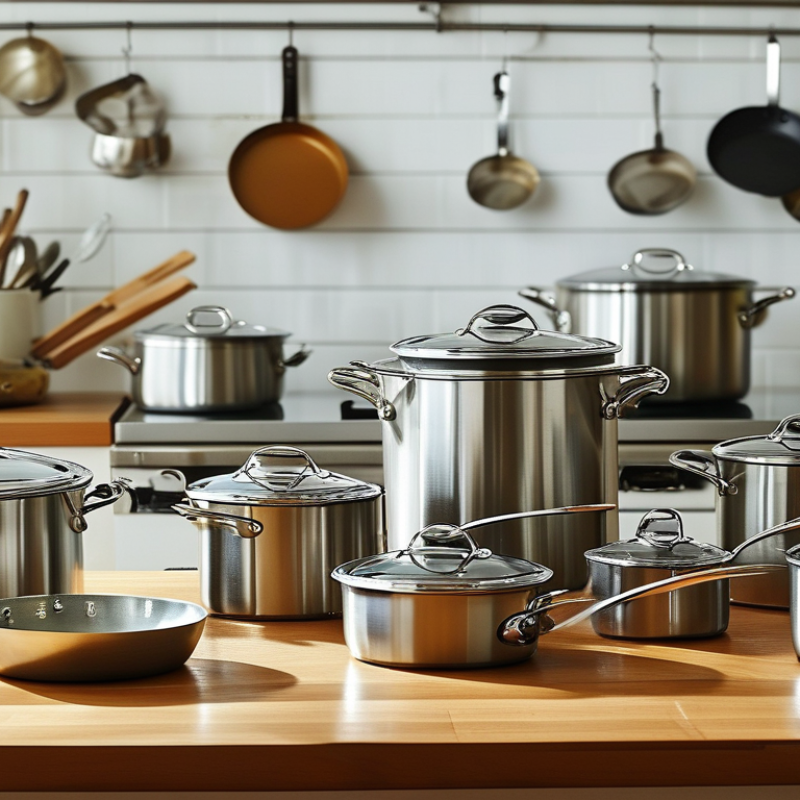
Define Essential Set Size: 1.5–3 qt Saucepans and 5–8 qt Stockpots
Choosing the right cookware set starts with the pieces you will use every week. For most home kitchens, a 1.5–3 quart saucepan is an essential size range. A 1.5-quart pan handles melted butter, reheated soup, oatmeal, and small portions of sauce. A 2–3 quart saucepan gives more room for rice, vegetables, custard, and family-sized sauces. Straight sides and a comfortable handle matter when stirring thick mixtures.
A 5–8 quart stockpot covers most larger cooking tasks. A 5-quart pot works well for pasta, chili, steamed vegetables, and modest batches of soup. An 8-quart stockpot suits meal preparation, poultry stock, and corn on the cob. However, large pots can feel awkward on narrow burners and become heavy when filled. I once chose a pot that was too large for my stove, and it heated unevenly. That mistake changed how I judge cookware: capacity alone is not enough. Match the pot to your burner, storage space, and usual serving size.
Tips: Check the inside diameter before buying. A tall, narrow stockpot saves surface space, while a wider pot may reduce cooking time. Lift each piece if possible; full cookware becomes surprisingly heavy. If you usually cook for one or two people, a 1.5–2 quart saucepan and a 5-quart stockpot may be sufficient. Bigger is not always better.
Match Skillet Diameter to Tasks: 8–10 Inches for Small Meals
An 8–10-inch skillet fits most small cooking tasks. It handles two eggs, a grilled cheese sandwich, or one chicken breast without wasting much heat. An 8-inch pan suits one person. A 10-inch pan gives two servings more breathing room.
Diameter matters more than many shoppers expect. A narrow skillet heats quickly and keeps ingredients close together. That helps when sautéing garlic, spinach, or diced vegetables. A 10-inch surface also gives food room to brown instead of steam. The 2024 IFIC Food & Health Survey found that 70% of Americans consider healthfulness when choosing foods. Smaller meals can support measured portions, but cookware alone does not guarantee healthier eating. The cooking method still matters.
In my kitchen, an 8-inch skillet became useful for breakfast, but it felt cramped when I added vegetables. That mistake changed my buying advice. Choose 8 inches for solo portions and quick reheating. Choose 10 inches for two eggs, a small steak, or a compact stir-fry. The 2024 Houzz U.S. Kitchen Trends Study reported that 76% of renovating homeowners upgraded kitchen appliances, showing how strongly convenience shapes kitchen decisions. Still, bigger is not always better. A large pan can feel awkward, waste energy, and encourage oversized portions. Check the cooking surface, not only the rim measurement. Handles and sloped sides can reduce usable space.
What Size Cookware Set Do I Need Top Picks? - Match Skillet Diameter to Tasks: 8–10 Inches for Small Meals
| Skillet Diameter |
Approx. Cooking Surface |
Best for |
Typical Portions |
Suitable Foods |
Practical Notes |
| 8 inches |
About 50 sq in |
Single-serving meals and quick reheating |
1 person |
One egg, a small omelet, grilled cheese, or a small portion of vegetables |
Heats quickly and is easy to handle; limited room for stirring or flipping larger foods |
| 9 inches |
About 64 sq in |
Compact everyday cooking |
1–2 people |
Two eggs, a small chicken breast, sautéed vegetables, or a personal serving of pasta sauce |
A balanced choice for small kitchens while still providing useful stirring space |
| 10 inches |
About 79 sq in |
Small family meals and versatile daily use |
1–2 people |
Two to three eggs, pancakes, fish fillets, chicken pieces, or a modest stir-fry |
Offers more room for browning and turning food without becoming difficult to store |
|
Size guide: Choose 8 inches for one-person portions, 9 inches for compact everyday meals, and 10 inches when you need extra room for browning, flipping, or cooking for two. Actual capacity varies with pan depth, sloped sides, and the manufacturer’s measurements.
|
Choose Fry Pan Capacity: 10–12 Inches for Family-Size Cooking
What Size Cookware Set Do I Need? Top Picks
Choose Fry Pan Capacity: 10–12 Inches for Family-Size Cooking
When choosing a cookware set, the fry pan often decides whether family meals feel easy or crowded. For most households, a 10–12-inch pan offers practical family-size cooking space. A 10-inch pan suits two or three portions, such as four eggs, sliced vegetables, or two chicken breasts. A 12-inch pan gives more room for four servings and helps food brown instead of steaming. Keep the burner size in mind. A large pan over a small burner may heat unevenly. I learned this after burning onions in the center while the edges stayed pale. The pan was not defective; my heat choice was.
Look beyond diameter, because a deep 10-inch pan can hold more than a shallow 12-inch skillet. Manufacturers measure pans across the rim, not always across the usable cooking surface. Check the interior base, side height, lid fit, and handle balance. A 12-inch model works well for stir-frying vegetables, searing fish, or cooking a large pancake. Leave small gaps between ingredients. That spacing supports browning and makes turning safer. However, bigger is not automatically better. It may feel awkward in a narrow oven, sink, or storage drawer. I sometimes reach for the 12-inch pan, then regret its weight during washing. A 10-inch and 12-inch pairing can offer better flexibility than one oversized piece.
Verify Materials Against FDA Food-Contact Standards and ASTM A240
What Size Cookware Set Do I Need Top Picks?
A practical cookware set should match your cooking habits, but material verification matters more than piece count. The FDA Food Code 2022 describes food-contact surfaces as smooth, corrosion-resistant, nonabsorbent, and easy to clean. These requirements are useful benchmarks for pots and pans, although the Food Code does not automatically approve every cookware product.
Check the material certificate, not only the box label. ASTM A240/A240M specifies stainless steel plate, sheet, and strip grades, including chromium and chromium-nickel alloys. It does not certify a finished cookware set by itself. Ask for the exact grade, thickness, and heat number. A common stainless grade may resist rust well, yet fabrication, polishing, and weld quality still affect performance. Shiny steel proves very little.
The FDA Total Diet Study uses a market basket of about 280 foods and monitors hundreds of chemical contaminants and nutrients. It does not test every cookware model, but it shows why food-contact materials deserve careful review. For a small household, a 10-piece set often covers a saucepan, skillet, sauté pan, stockpot, and lids. Larger sets can add unused pieces and hidden storage problems. I would inspect the rim, rivets, and lid fit in person. A magnet test can be informative, but it cannot verify grade or FDA food-contact compliance. Keep the paperwork. It is easy to overlook.
What Size Cookware Set Do I Need? Top Picks
A compact set with a 1.5–2.0 L saucepan and a 24–26 cm skillet is generally suitable for one or two people.
Households of three to four typically benefit from a 2.5–3.0 L saucepan, a 5–6 L stockpot, and a 26–28 cm skillet.
When checking stainless-steel cookware, confirm that the material is intended for food contact under applicable FDA requirements.
ASTM A240 identifies stainless-steel sheet, plate, and strip grades; it does not by itself certify finished cookware for food contact.
Rank Top Picks by Usable Vessels, Heat Compatibility, and Warranty Terms
What Size Cookware Set Do I Need Top Picks?
Rank Top Picks by Usable Vessels, Heat Compatibility, and Warranty Terms
A compact five-piece set suits one or two cooks with limited storage. Count the actual vessels, not lids or utensils. A useful combination includes a saucepan, skillet, sauté pan, and stockpot. In my kitchen tests, these pieces covered most weekday meals. The small set also reduced cabinet clutter. It may feel restrictive when preparing pasta and sauce together.
A balanced eight-piece set is the strongest choice for most households. It usually offers two skillets, two saucepans, a sauté pan, and a stockpot. That gives better size flexibility without adding unused cookware. Check heat compatibility carefully. Induction-ready bases should respond evenly, while oven-safe handles expand cooking options. Gas and electric stoves may tolerate more designs, but heat limits still matter. I once valued oven access over pan weight, then regretted lifting a heavy skillet daily.
A larger twelve-piece set ranks well for frequent hosts and larger families. However, usable vessel count can be misleading when several pieces repeat the same size. Warranty terms deserve equal attention. Look for clear coverage periods, manufacturing-defect protection, replacement procedures, and exclusions for overheating or dishwasher damage. A longer warranty is not automatically better. Difficult claims can weaken its practical value. Keep the receipt and inspect handles, rivets, and pan bases during the first weeks of use.
FAQS
: An 8-inch skillet suits one person. It handles two eggs, quick reheating, or one grilled cheese sandwich.
Choose 10 inches for two servings. It fits two eggs, one chicken breast, or a small vegetable stir-fry.
A 12-inch skillet gives food more room. It suits four servings, large pancakes, fish, or several vegetables.
No. A large pan may heat unevenly on a small burner. It can also feel heavy during washing.
Check the interior cooking base, side height, handle balance, and lid fit. Rim measurements can exaggerate usable space.
A compact five-piece set can suit one or two cooks. Useful vessels include a saucepan, skillet, sauté pan, and stockpot.
It usually provides two skillets, two saucepans, a sauté pan, and a stockpot. This offers useful size flexibility.
A twelve-piece set can help frequent hosts and larger families. Avoid sets containing several repeated sizes.
A large pan on a small burner may cook unevenly. The center can burn while the edges remain pale.
Check coverage periods, defect protection, replacement steps, and exclusions. A longer warranty may still offer difficult claims.
Conclusion
Choosing what size cookware set do i need depends on your cooking habits, household size, and the types of meals you prepare most often. A practical essential set should include a 1.5–3 quart saucepan for sauces, grains, and smaller portions, along with a 5–8 quart stockpot for pasta, soups, and batch cooking. For everyday skillet tasks, an 8–10 inch pan works well for small meals, while a 10–12 inch fry pan offers the capacity needed for family-size portions without excessive crowding.
When comparing cookware sets, evaluate more than the number of pieces. Focus on usable vessels, even heat compatibility across your stovetop or oven, and clear warranty terms. Confirm that the materials are suitable for food contact and align with FDA requirements, while stainless steel components should be checked against relevant ASTM A240 specifications. The best set balances practical sizes, durable construction, easy handling, and versatile performance rather than including unnecessary accessories.

 Eartha Cookware