A pan can look perfect on a store shelf and still disappoint over a hot burner. Stainless steel often browns food well, but it may heat unevenly without an aluminum or copper core. Cast iron holds heat for searing, though it is heavy and needs careful drying. Nonstick cookware releases eggs easily, but its coating requires gentle utensils and moderate heat. Small differences matter.
Food scientist Harold McGee, author of On Food and Cooking, offers a useful principle: “Different materials conduct heat at different rates.” That distinction is central to how to compare different cookware materials. Compare more than the price tag. Consider heating speed, heat retention, weight, cleaning, durability, and the foods you cook most. A saucepan for delicate sauces has different demands from a skillet used for steak. Handle comfort matters, too; a heavy pan can feel less manageable after several minutes at the stove.
There is no perfect material for every kitchen. A multi-layer pan may balance responsiveness and even heating, but it can cost more. Cast iron can last for years, yet its upkeep is not effortless. I would not treat any single “best cookware” claim as universal. It depends on your stove, habits, and patience for maintenance. A little doubt is useful. Compare the details before buying, then choose the trade-offs you can live with.
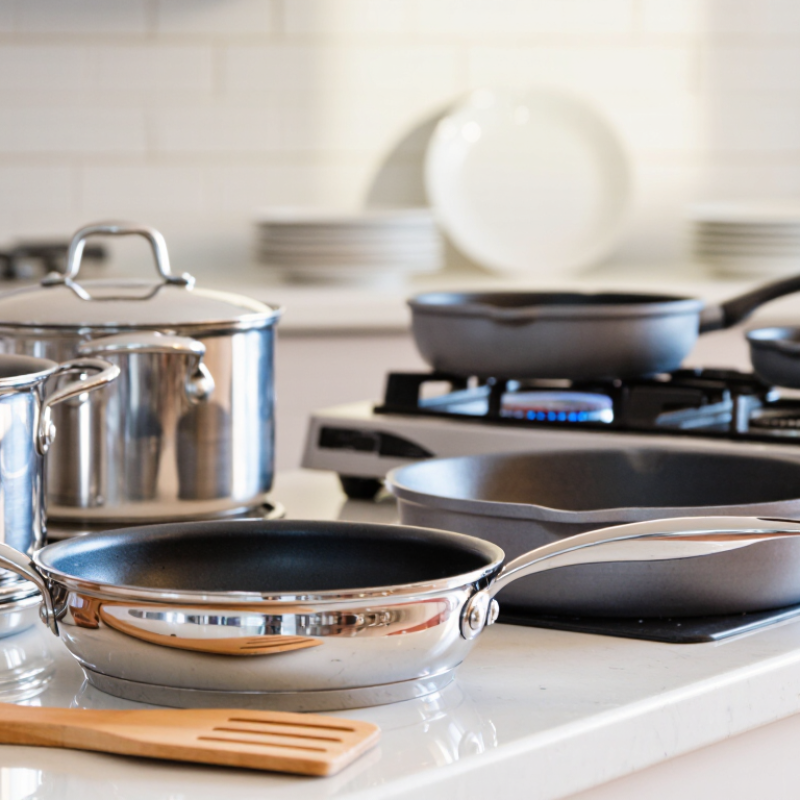
Before buying cookware, compare materials against the meals you actually make. Heat response affects timing: thin aluminum often warms quickly, while cast iron heats more slowly and retains warmth. That matters when searing vegetables or lowering the heat under a simmering sauce. A pan can look impressive and still frustrate you. I have made that mistake.
Weight changes everyday handling. A heavy pan may feel steady on the stove, but lifting it with one hand can be awkward. Reactivity matters too: acidic foods, such as tomato sauce, can interact with some uncoated metals and affect flavor. Stainless steel and well-maintained enamel are generally less reactive. Still, coatings and construction vary, so check the product details rather than relying on material names alone.
Care and cost deserve equal attention. Some cookware needs seasoning or careful drying; other pans tolerate routine washing but may not handle rough utensils. Ask whether the cleaning steps fit your habits. Be honest here. A lower purchase price may not mean better value if the pan wears quickly, while an expensive one is not automatically a better match. Compare expected lifespan, maintenance, and how often you will use it.
Why Compare Different Cookware Materials Before Buying?
Engineering Toolbox lists thermal conductivity at 401 W/m·K for copper, 237 for aluminum, and 16 for 304 stainless steel. These figures describe how readily heat moves through each material. Copper transfers heat quickly. Aluminum is also highly conductive, while 304 stainless steel conducts heat much less readily. The difference is substantial, but conductivity alone does not predict how a finished pan will cook.
A thin stainless-steel base may heat unevenly, while a layered base with an aluminum or copper core can spread heat more effectively. Thickness, construction, burner size, and pan contact all matter. A useful kitchen test is to warm a pan gently and watch how evenly butter melts across its surface. Small details show up fast. Still, that test is imperfect; the flame and pan shape can skew what you see. Treat the figures as a comparison tool, not a promise of cooking results. Check what material forms the cooking surface and what sits beneath it. A pan’s handle may stay cooler, too, but that depends on its design, not conductivity data alone.
At room temperature, copper and aluminum conduct heat more readily than 304 stainless steel. Higher thermal conductivity helps heat spread through a material more quickly, but cookware performance also depends on construction, thickness, and heat source. Values are approximate and can vary with alloy and temperature.
“Solid” cookware is made from one main material, such as cast iron or aluminum. Its heating behavior depends on the material and thickness. A thick cast-iron pan holds heat well, but may respond slowly when you lower the burner. Aluminum heats quickly and feels lighter. Not always better.
Clad cookware bonds layers, often stainless steel around an aluminum or copper core. That inner layer helps spread heat across the cooking surface, while stainless steel offers a durable exterior. Check the base and sidewalls: some pans use layered metal throughout, while others have a layered base only. The difference can show up when you simmer sauce near the pan’s edge.
Coated cookware adds a nonstick surface over a metal body. It can make eggs or delicate fish easier to release, and cleanup is often quick. The coating can wear, though, so use suitable utensils and follow the care instructions for heat limits. A practical comparison: lift the pan, inspect its underside, and consider what you cook most. A lightweight pan may be easier to handle, but it can feel less steady on a crowded stovetop. I might still choose the wrong one if I focused only on easy cleanup.
Before comparing cookware materials, check whether the pan will work with your cooktop. Induction cooktops use a magnetic field to heat compatible cookware directly. A magnet is a useful first check: hold one against the bottom of the pan. If it clings firmly, the base is likely magnetic. A weak hold may mean uneven heating or poor performance. Still, this test is not a guarantee. Some pans have a magnetic layer that is too small or thin for reliable results.
Check the cookware instructions for induction compatibility, and inspect the base as well. It should sit flat against the cooktop, without wobbling or visible dents. Base size matters, too; a very small pan may not be detected by some cooktops. Aluminum or copper cookware may work when it includes a magnetic layer, while cookware made only from those metals generally will not. That detail is easy to miss. A quick magnet test can save a return trip, but it cannot replace the manufacturer’s guidance. If the labeling is unclear, verify the exact model before buying.
| Cookware Material | Induction Compatibility | Why It Works or Does Not | Other Cooktops | What to Check Before Buying |
|---|---|---|---|---|
| Cast iron | Generally compatible | Cast iron is magnetic, so it can interact with an induction cooktop. | Usually suitable for gas, electric coil, and many radiant-glass cooktops. | Choose a flat-bottomed pan for good contact. Lift rather than slide it across glass to reduce the risk of scratches. |
| Carbon steel | Generally compatible | Carbon steel is magnetic and can be heated by induction. | Usually suitable for gas, electric coil, and many radiant-glass cooktops. | Check that the base is flat and the pan is approved for your cooktop; some lightweight pans may warp under high heat. |
| Stainless steel | Depends on the grade and construction | Some stainless steels are magnetic, while others are not. A magnetic base layer can make otherwise nonmagnetic cookware induction-compatible. | Often suitable for gas and conventional electric cooktops; radiant-glass suitability depends on the cookware base. | Look for an induction symbol or test the base with a magnet. A magnet that sticks is a useful check, but the manufacturer’s compatibility guidance is best. |
| Aluminum | Not compatible on its own | Aluminum is not magnetic. Some aluminum cookware works when it has a magnetic stainless-steel plate or other induction-compatible base. | Usually suitable for gas and conventional electric cooktops; check radiant-glass guidance. | Confirm that the cookware has an induction-ready base; the pan body alone does not determine compatibility. |
| Copper | Not compatible on its own | Copper is not magnetic. Cookware with a magnetic base layer may be designed for induction. | Usually suitable for gas and conventional electric cooktops; check the cookware instructions for radiant-glass use. | Look for an induction symbol or a clearly specified magnetic base. |
| Glass or ceramic | Not compatible on its own | These materials are not magnetic. A special magnetic layer would be required for induction use. | Compatibility varies by product and cooktop; use only on cooktops listed in the cookware instructions. | Check the cookware’s stated cooktop types and temperature limits before use. |
| Enameled cast iron | Generally compatible | The cast-iron body is magnetic; the enamel coating does not usually prevent induction heating. | Often suitable for gas and electric cooktops, subject to the manufacturer’s instructions. | Check that the base is flat and avoid dragging the heavy cookware across a glass surface. |
Quick check: Induction cooktops need cookware with a magnetic cooking surface. A magnet that sticks to the base is a helpful screening test, but cookware shape, base size, and the cooktop’s instructions also matter.
Choosing cookware is less about finding one “best” material and more about matching upkeep to your routine. Stainless steel handles frequent use and high-heat browning, but food may stick if the pan is cold or crowded. It also develops spots and discoloration, which are usually cosmetic. Cast iron holds heat well for searing and steady cooking. It is heavy, though, and needs prompt drying to prevent rust. A thin coat of oil can help protect it. That extra step matters.
Think about what happens after dinner. If you often cook quickly and want easy cleanup, a nonstick pan may suit eggs or delicate fish. Use gentle utensils and avoid overheating it; the coating will not last forever. Ceramic-coated pans also need careful handling, despite their smooth surface. Not always. A dishwasher-safe label can save time, but hand-washing may help preserve some finishes. Follow the care instructions for the specific pan. I’d give weight more attention, too: lifting a full cast-iron skillet can feel very different from lifting it empty. The right choice depends on your meals, storage space, and honest willingness to maintain it. My own preference might change on a tired weeknight.
Thin aluminum often heats quickly. Cast iron warms more slowly but retains heat during searing or simmering.
Not necessarily. A heavy pan can feel steady, but lifting it one-handed may be awkward.
Clad cookware bonds layers, often stainless steel around an aluminum or copper core. Check whether layers cover the sides or only the base.
Stainless steel and well-maintained enamel are generally less reactive. Still, check the pan’s construction details.
Yes. Their surfaces can help eggs or delicate fish release easily, and cleanup is often quick.
Use suitable utensils and follow its heat limits. Coatings can wear.
Some pans need seasoning or careful drying. Ask whether their cleaning steps fit your routine.
Not always. Compare expected lifespan, care, and how often you’ll use the pan. I’ve chosen poorly by focusing only on easy cleanup.
Knowing how to compare different cookware materials starts with evaluating the qualities that affect everyday cooking: heat response, weight, reactivity, care requirements, and cost. Conductivity data can offer a useful reference point: copper conducts heat at about 401 W/m·K, aluminum at 237 W/m·K, and 304 stainless steel at 16 W/m·K. These figures help explain how quickly materials transfer heat, but the overall performance also depends on the cookware’s construction.
Solid, clad, and coated cookware each combine materials differently, influencing heating, durability, and maintenance. Check cooktop compatibility before buying, especially for induction, which requires a magnetic cooking surface. Finally, consider how you cook and how much care you are willing to provide. A material that suits frequent high-heat cooking may not be the most convenient choice for someone who prioritizes lighter cookware or easy cleanup. Comparing these factors together makes it easier to choose cookware that fits your habits, budget, and kitchen.

Eartha Cookware