The global kitchenware market is undergoing a seismic shift. Modern consumer lifestyles prioritize space efficiency, environmental responsibility, and culinary versatility. This demand has catalyzed the rapid growth of flexible kitchen tools, which represent a hybrid category merging advanced elastomer chemistry with ergonomic physical configurations. From detachable handle systems that transition seamlessly from stovetop to oven, to platinum-cured silicone spatulas capable of withstanding dynamic thermal extremes, flexible kitchen tools are no longer niche conveniences; they are core requirements of the contemporary kitchen.
In response to this transformation, international standards bodies have escalated the regulatory benchmarks. In Europe, the **CE certification** acts as a rigorous filter, verifying that these highly adaptable products conform to essential health, safety, and environmental protection protocols. Brands and B2B buyers must prioritize sourcing from factories that integrate these standards not as an afterthought, but at the foundational level of material synthesis and mechanical design.
Eliminating heavy metals, BPA, and fluorinated compounds (PFAS/PFOA) in favor of high-purity inorganic ceramics and organic silicon polymers.
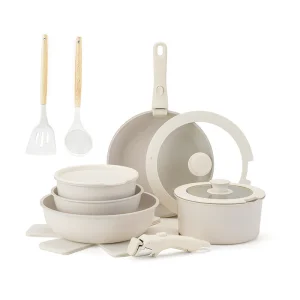
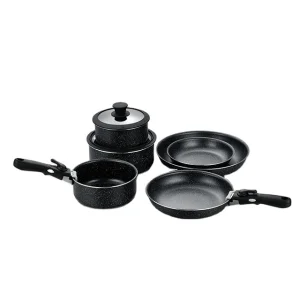
Developing removable handle structures that reduce physical storage volume by up to 70%, addressing the space constraints of urban dwellings.
Ensuring kitchen tools maintain structural and chemical integrity across a wide thermal range (-60°C to +260°C), preventing material degradation.
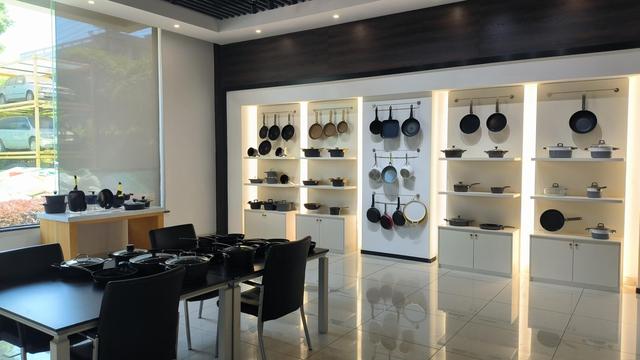
Foshan Eartha Cookware Co., Ltd. is a professional China ceramic cookware set manufacturer and nonstick kitchen cookware supplier, dedicated to providing high-quality, healthy, and innovative cookware solutions for customers worldwide. Located in Foshan, Guangdong, one of China's leading manufacturing hubs, Eartha Cookware integrates product design, research and development, manufacturing, and global sales to serve international markets.
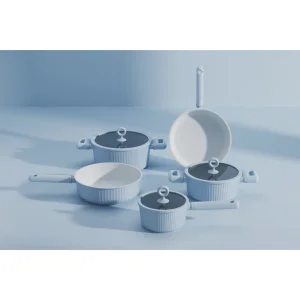
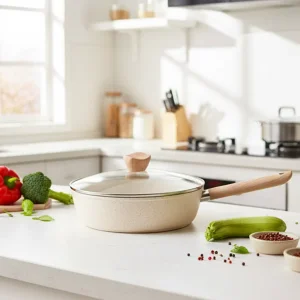
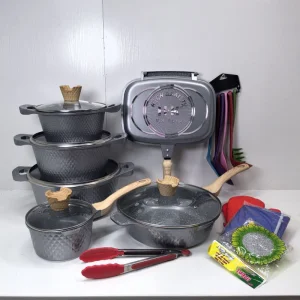
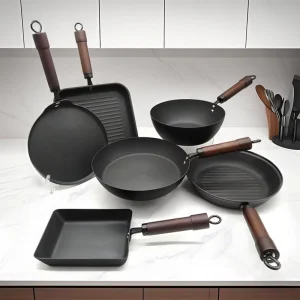
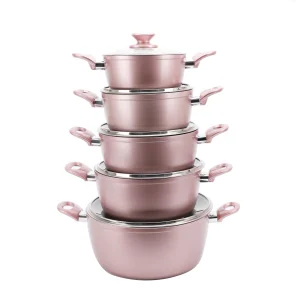
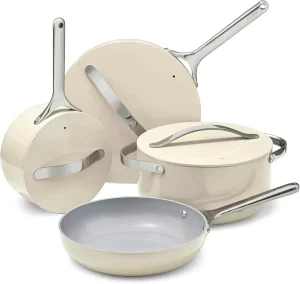
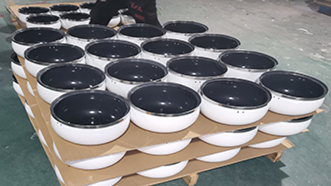
Our extensive product range includes ceramic nonstick cookware sets, frying pans, saucepans, stock pots, casseroles, induction cookware, PFAS-free cookware, and multifunction kitchen cookware. Designed for modern kitchens, our products combine excellent heat distribution, superior nonstick performance, durability, and stylish aesthetics to enhance everyday cooking experiences.
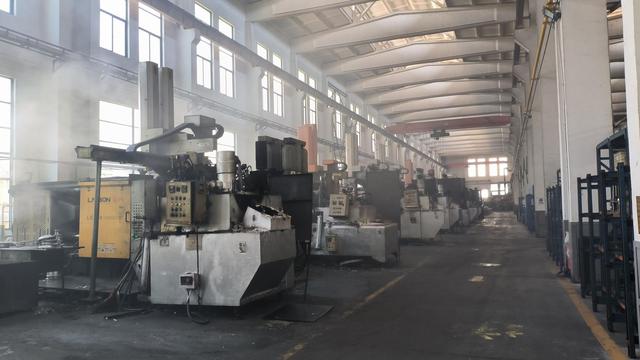
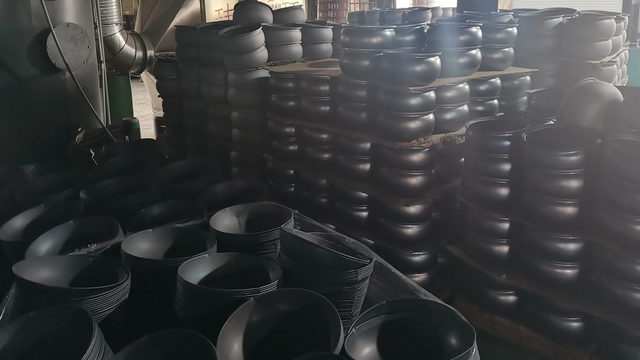
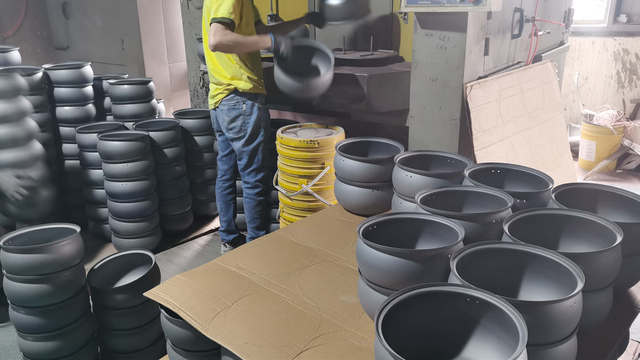
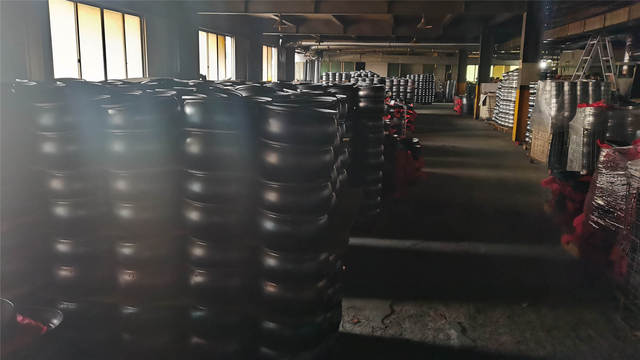
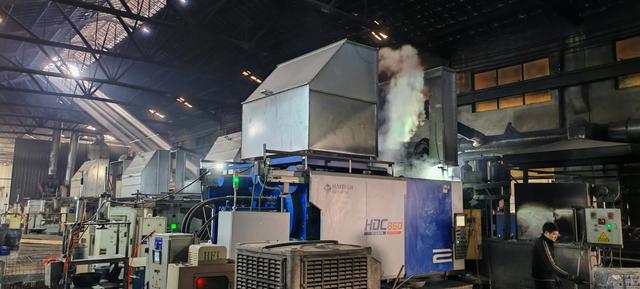
Equipped with advanced automated production lines and comprehensive testing facilities, Eartha Cookware strictly controls every stage of manufacturing, from raw material selection to final inspection. We are committed to producing environmentally friendly and food-safe cookware that meets international quality and safety standards. Our experienced quality control team ensures consistent product performance, reliability, and long service life.
To support global brand owners, wholesalers, distributors, retailers, and e-commerce businesses, we offer flexible OEM and ODM services. Our professional R&D team works closely with customers to develop customized cookware solutions, including product design, coating options, color matching, packaging, and private labeling.
Driven by innovation, craftsmanship, and customer satisfaction, Foshan Eartha Cookware Co., Ltd. continues to expand its presence in international markets. We are committed to becoming a trusted global partner by delivering premium ceramic cookware solutions that promote healthier, safer, and more enjoyable cooking experiences for consumers around the world.
For enterprise B2B procurement agents, global regulatory compliance is a non-negotiable metric. Selling kitchenware in the European Union demands compliance with a strict web of harmonized standards. CE certification indicates that the kitchen tools satisfy the essential health and safety mandates of EU directives. Specifically, for flexible kitchenware containing metal parts or electrical modules (such as smart thermal indicators), the CE mark certifies adherence to the Low Voltage Directive (LVD) and the Electromagnetic Compatibility (EMC) Directive.
Crucially, food-contact materials (FCM) must comply with Regulation (EC) No 1935/2004 and the specific German LFGB regulations. These standards regulate the migration of chemical constituents (such as organic silicon monomers and heavy metals) into food products under simulated cooking conditions.
Ensuring that the total chemical transfer from the flexible tool to the food is kept below 10 mg/dm², preserving original food flavor and safety.
Strict monitoring of monomer components (e.g., siloxanes) using gas chromatography-mass spectrometry to guarantee zero toxic release.
Applying the EN 12983-1 standard to verify the load-bearing capability of handles, confirming they can withstand rigorous usage without deformation.
As global environmental policies tighten, the cookware industry faces the critical challenge of phasing out per- and polyfluoroalkyl substances (PFAS, including PFOA). Traditional fluorpolymer-based nonstick coatings are being replaced by ceramic nonstick coatings and medical-grade silicones. Ceramic coatings, derived from sand (SiO2) via a sol-gel process, offer high temperature resistance (up to 450°C) without releasing harmful fumes.
For enterprise brands, offering PFAS-free flexible kitchenware is crucial for maintaining market share. Consumers actively seek health-conscious options, and regulatory frameworks in the EU and US are progressively restricting fluorinated materials. Foshan Eartha Cookware Co., Ltd. leads this transition by integrating safe ceramic and silicone components into our global product catalog.
To help procurement officers make informed decisions, this technical breakdown compares the two leading coating systems:
| Attribute | Sol-Gel Ceramic Coating | Traditional PTFE Coating |
|---|---|---|
| Environmental Profile | PFAS, PFOA, Lead, and Cadmium Free | May release PFAS derivatives during production |
| Thermal Integrity Limit | Up to 450°C (No decomposition) | Decomposes at 260°C (Releases toxic vapors) |
| Manufacturing Energy Cost | Lower curing temperature (approx. 200°C) | High curing temperature (approx. 400°C) |
| Recyclability | Eco-friendly breakdown, non-toxic residue | Difficult to recycle, persistent in environment |
The next decade of flexible kitchen tools belongs to intelligence and deep integration. Modern research is steering toward the integration of smart sensors into the flexible handles of pots and pans. These sensors communicate via Bluetooth or NFC to provide real-time temperature telemetry directly to consumers' smartphones or induction hobs, preventing overheating and optimizing energy consumption.
From a material standpoint, structural scientists are pioneering the use of **thermochromic silicone elements**—polymers that shift color dynamically as the cooking surface crosses critical temperature boundaries. Additionally, advances in self-healing coatings will extend the lifespan of nonstick surfaces by filling micro-abrasions under moderate heat cycles.
Widespread adoption of food-contact-approved thermochromic silicone components in entry-level consumer models, shifting color indicators at 180°C to prevent coating damage. Development of universal detachable handles compatible across different brand geometries.
Integration of ultra-thin, heat-powered piezoelectric generator units inside cookware bodies, powering Bluetooth sensor modules without batteries. Commercialization of organic, plant-derived nonstick matrices to achieve 100% biodegradation post-lifecycle.
Navigating the transition from factory floor to retail shelf requires deep logistical expertise. Foshan Eartha Cookware Co., Ltd. provides robust localization support for international buyers. This includes custom packaging options designed to optimize container load factors, reduce cardboard waste, and prevent damage during transit. Our localized regulatory support includes providing comprehensive Technical Files, Declarations of Conformity (DoC), and testing certificates from third-party laboratories (SGS, TUV, Intertek) to ensure smooth customs clearance in destination markets.
Through our flexible OEM and ODM services, we tailor products to the specific aesthetic preferences, material properties, and packaging standards of diverse regional markets, helping our partners build competitive advantages.
 Eartha Cookware