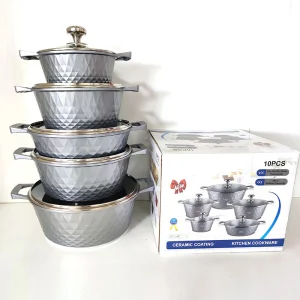
Engineered for thermal efficiency, induction compatibility, and structural longevity.
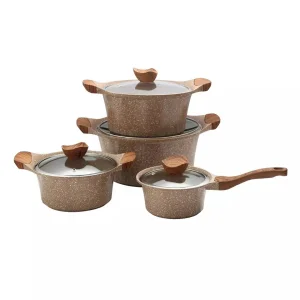
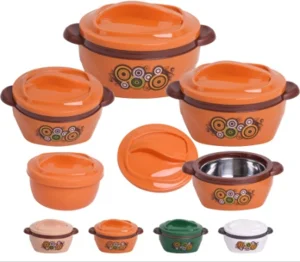
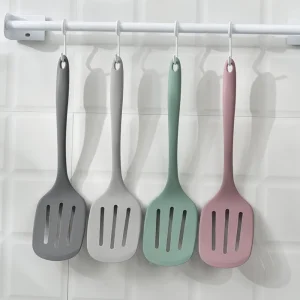
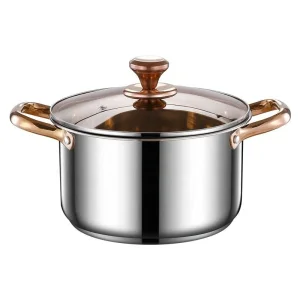
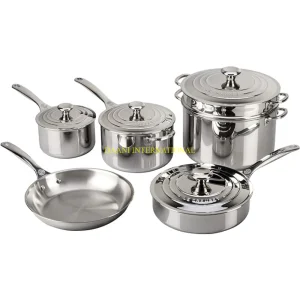
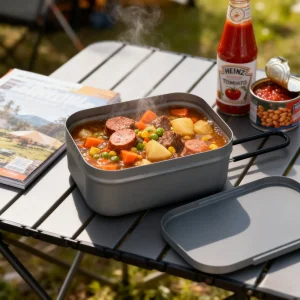
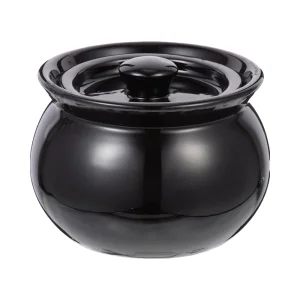
In the modern kitchenware industry, the request for classic, lifetime-durable cookware has driven the resurgent global demand for Cast Iron Skillets and Cookware Sets. For brand managers, wholesalers, and e-commerce growth directors, identifying a reliable manufacturing plant capable of combining high-purity casting with custom branding specifications is crucial for securing a robust market share.
Advanced DISA automatic sand molding systems ensure uniform density, dimensional precision, and rapid production cycles for large-scale purchase orders.
Our raw iron castings and thermal coatings are verified PFAS-free and comply with international food safety certifications including FDA, LFGB, and RoHS.
From custom laser-etched branding and unique handle geometries to specialized organic pre-seasoning, we optimize products for your target demographic.
Foshan Eartha Cookware Co., Ltd. is a prominent China-based ceramic cookware set manufacturer and nonstick kitchen cookware supplier, dedicated to providing high-quality, healthy, and innovative cookware solutions for customers worldwide. Situated in Foshan, Guangdong—one of China's primary manufacturing and export hubs—Eartha Cookware integrates product design, rigorous research and development, multi-materials processing, and global logistics execution.
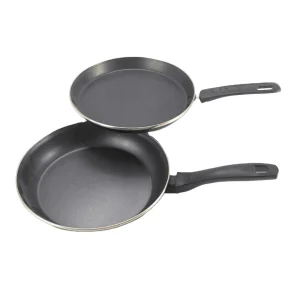
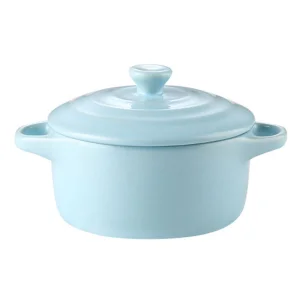
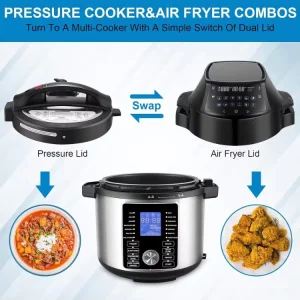
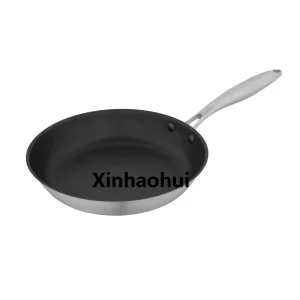
Our expansive production capabilities cover a broad variety of kitchen configurations: ceramic nonstick cookware sets, frying pans, saucepans, stock pots, casseroles, induction cookware, PFAS-free cookware, and multifunction kitchen sets. By leveraging advanced casting methods and multi-material engineering, we enable global brand owners, wholesalers, distributors, and e-commerce enterprises to build highly profitable product lines.
Equipped with advanced automated production lines and comprehensive metallurgical and surface quality testing facilities, Eartha Cookware strictly controls every stage of manufacturing. From raw material inspection to final packaging, our QA protocols ensure consistent thermal efficiency, dimensional accuracy, and long-term durability.
The commercial procurement of cast iron cookware requires deep attention to technical details, metallurgy, and material safety. Buyers from North America, Western Europe, and Asia-Pacific prioritize three key pillars when selecting a manufacturing partner:
Heavy-duty skillet production relies on precise metallurgical control. The process begins in high-frequency induction furnaces, where pig iron, steel scrap, and specialized alloys are combined to produce grey iron with optimized carbon and silicon distribution. This graphite microstructure provides cast iron with its excellent heat retention properties.
Using automated green sand molding machines, we create precise sand molds. This automation maintains dimensional tolerances within fractions of a millimeter, ensuring that skillet bases are flat, handles are balanced, and wall thicknesses are uniform. This precision prevents hot spots during cooking.
After cooling, the raw castings undergo intense mechanical cleaning. High-velocity steel shot-blasting removes residual sand and opens up the microscopic pores of the iron. This micro-texture is essential for securing the polymerized oil layer or vitreous enamel coatings applied in the next stage.
Our pre-seasoned cast iron skillets pass through electrostatic oil spray booths, receiving a uniform coating of pure vegetable oil. They are then baked in conveyor ovens at temperatures exceeding 350°C (662°F). This heat causes the unsaturated fats to polymerize, forming a durable, natural, non-stick surface.
| Cookware Material Type | Heat Retention Index | Durability Limit | Thermal Distribution | Ideal Use Case |
|---|---|---|---|---|
| Pre-Seasoned Cast Iron | Excellent (High Thermal Mass) | Generation-spanning (Lifetime) | Steady, slow conduction | High-heat searing, baking, rustic frying |
| Enameled Cast Iron | Excellent | High (Prone to chipping under impact) | Steady, slow conduction | Acidic braising, slow cooking, boiling |
| Die-Cast Aluminum (Ceramic) | Moderate | Medium (Coating wear over time) | Rapid & extremely uniform | Low-fat cooking, everyday quick frying |
| Three-Ply Stainless Steel | Moderate-High | High | Highly uniform | Acidic sauces, high-volume catering |
Today's cookware market faces changing freight costs, shifting import tariffs, and demanding ESG (Environmental, Social, and Governance) targets. Foshan Eartha Cookware Co., Ltd. addresses these challenges by offering smart cargo consolidation, direct access to deepwater ports (Shenzhen and Guangzhou), and raw material sourcing that reduces waste.
By consolidating orders across cast iron, die-cast aluminum, and stainless steel lines, importers can maximize container load factors. This approach reduces per-unit shipping costs and lowers the carbon footprint of transport, helping businesses meet their sustainability goals.
To trade smoothly in international markets, products must meet strict regulatory standards. Our manufacturing lines run under an ISO 9001:2015 certified Quality Management System. We provide comprehensive documentation to confirm compliance with global rules:
Each shipment is backed by batch-testing records that trace chemical composition, coating thickness, and impact resistance. This documentation helps prevent customs delays and product liability issues.
Technical and logistics answers for procurement specialists and buyers.
Expand your inventory with our high-demand kitchenware solutions.
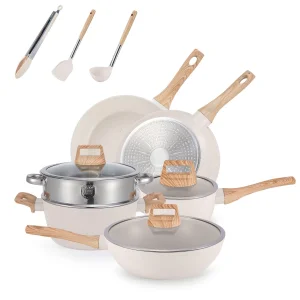
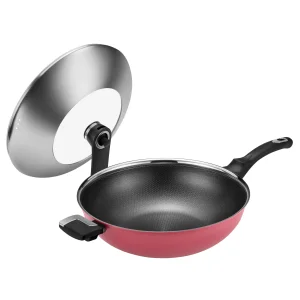
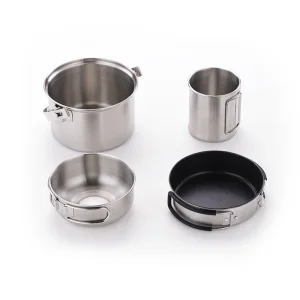
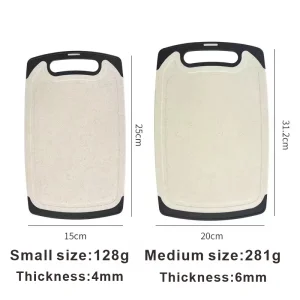
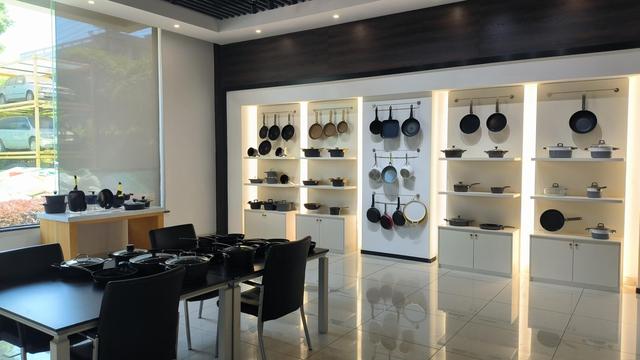
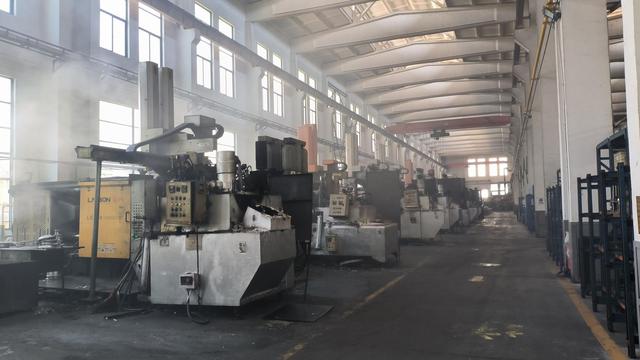
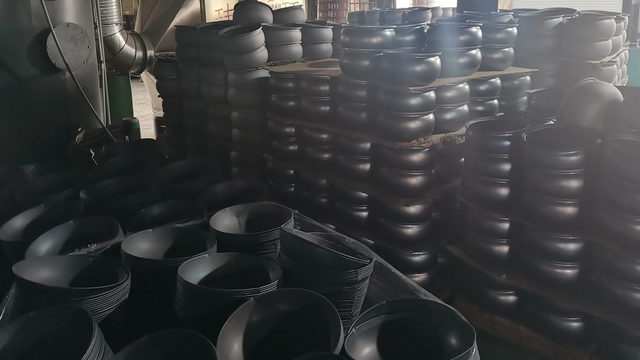
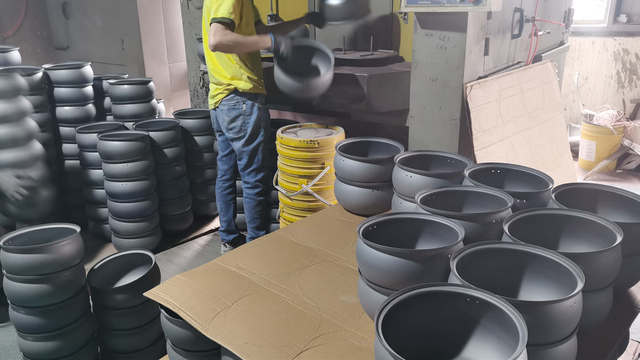
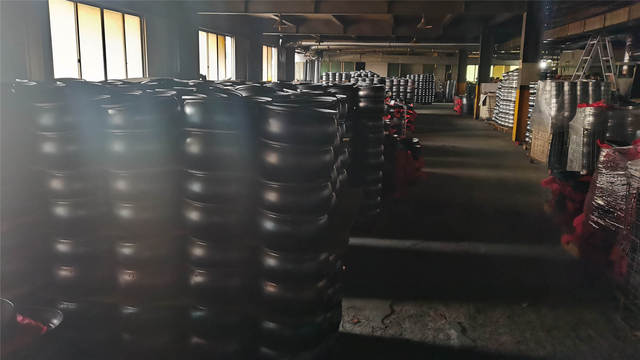
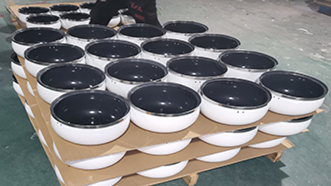
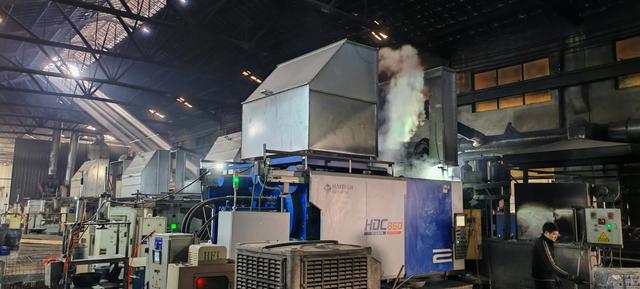
Transparent display of our production lines, raw materials, and quality inspection centers.
 Eartha Cookware